
Define the purchase duty
For precipitated metal-hydroxide solids, procurement should distinguish precipitation chemistry from flocculation. An anionic emulsion may be a candidate for solid-liquid separation where testing supports it, but its purchase does not replace control of dissolved-metal removal or the upstream chemical program.
Identify the sample, actual feed and required water-and-solids result before asking for a recurring supply commitment.
Preserve the precipitation sequence
Record feed origin, pH-control steps, coagulant, contact timing and solids condition. Identify the measurements required by the plant for water reuse or discharge. The industrial clarification file provides the process boundary.
Do not infer dissolved-contaminant removal from a clear supernatant. Keep the relevant analytical and compliance decisions with the responsible site team.
Compare flocculants at a common condition
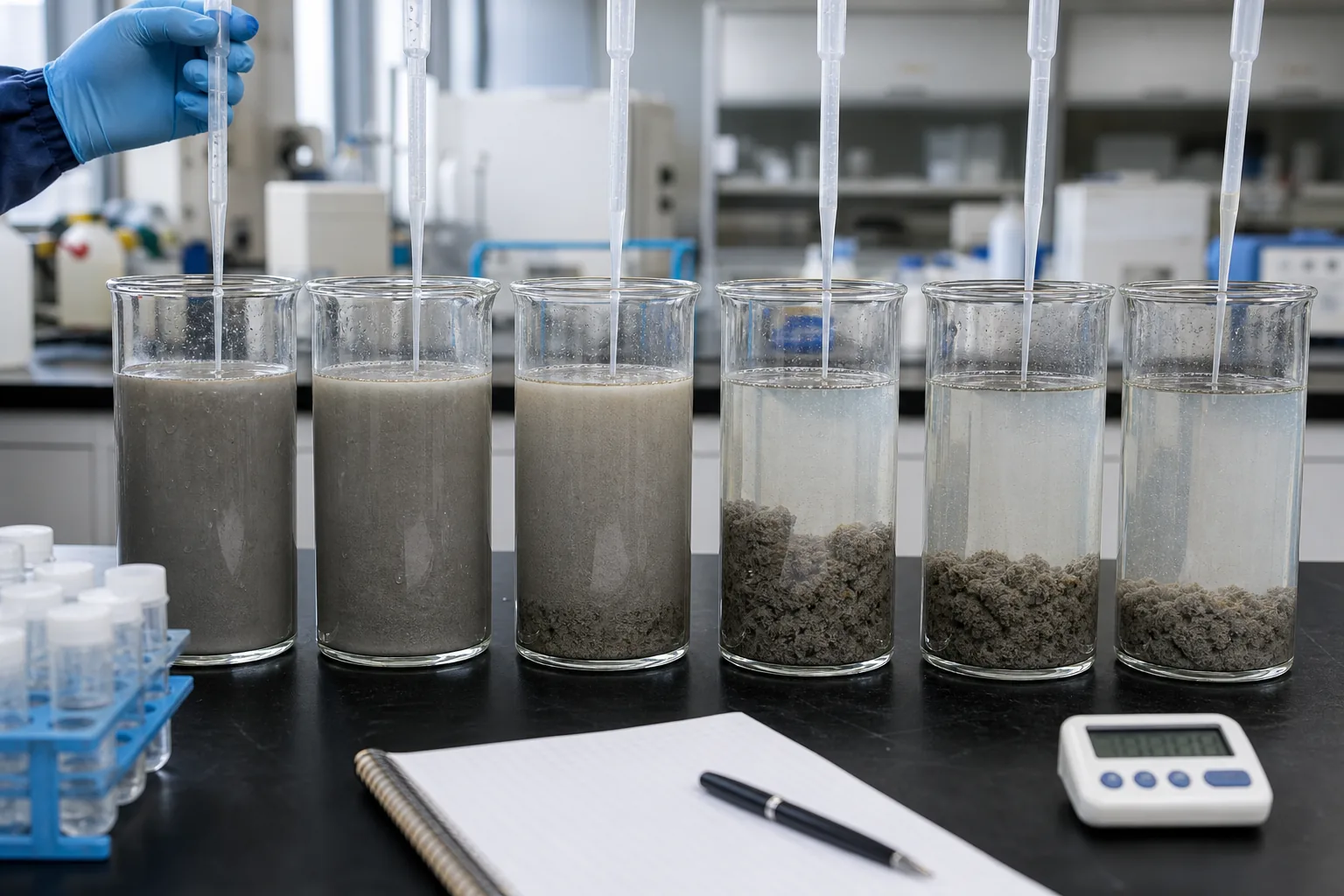
Hold upstream chemistry fixed for a direct polymer screen. Prepare candidates consistently, use active-dose steps and measure residual fine solids alongside settling and compacted volume. State explicitly if the proposal changes the whole treatment sequence.
The charge-screen method tests the hypothesis without guaranteeing that every precipitated suspension needs the same ionic family.
Accept water and sludge together
Run the relevant clarifier or filtration confirmation with current feed. Measure the specified water outputs and sludge handling, cycle or release constraints. Link the accepted product code and preparation to the commercial offer.
An acceptable solids-capture result is one part of the plant acceptance record, not proof that every discharge or disposal requirement has been met.
Test the limiting condition
A pH change can alter the precipitated particles while the polymer appears to improve. Record the sequence and repeat matched conditions before crediting the new emulsion alone with the observed result or quoting a fixed dose.
Preserve any untested condition in the acceptance record. A promising sample response is not an unrestricted capacity or treatment guarantee.
Keep a traceable comparison
| Purchase check | Evidence | Decision boundary |
|---|---|---|
| Chemistry | pH and precipitation record | Upstream role remains controlled |
| Comparison | Fixed sequence and active-dose curve | Fair product screen |
| Acceptance | Required water tests and sludge route | No clarity-only compliance claim |
Retain the commercial code, sample reference, preparation method and measurement timing. Record rejected conditions as well as the preferred point so later shipments can be assessed against the actual evidence.
Request a scoped recommendation
Send the approved treatment sequence, solids and water results, equipment, current dose and analytical acceptance requirements. Request a sample set for the defined flocculation stage, not an unsupported all-purpose removal guarantee.
Use the anionic emulsion sample and quotation form and review supply and packaging controls with Gongyi Xinqi Polymer Co., Ltd.. Confirm offered grade, availability and commercial terms before ordering.