
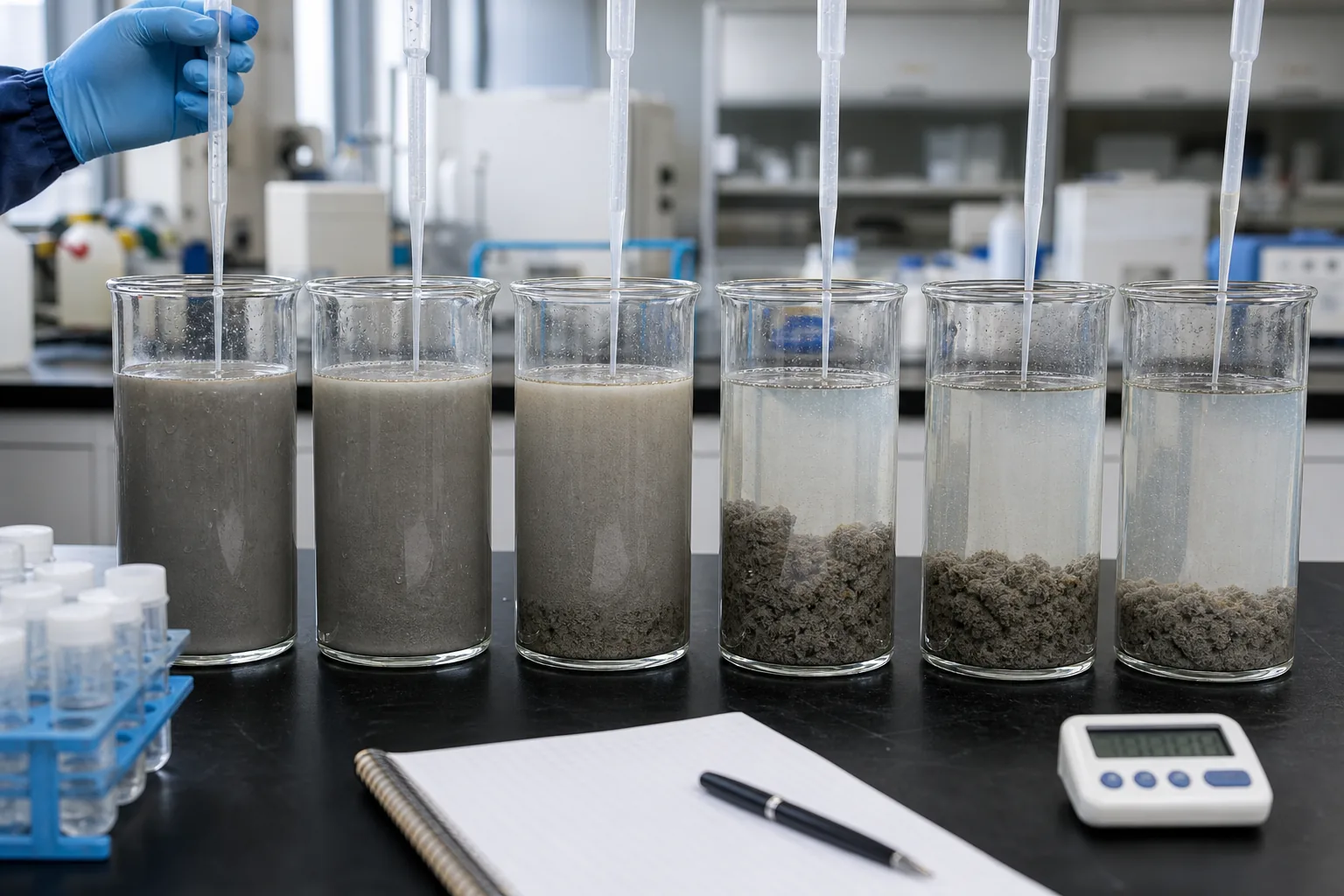
Identify the solids actually present
Metal hydroxides, mineral fines and coagulant-conditioned particles can respond differently from biological sludge. Record the treatment sequence, pH, temperature, conductivity and coagulant residual.
Confirm that an anionic family is appropriate through testing. Do not transfer a mineral-slurry recommendation to an unrelated organic feed without evidence.
Test the sequence
Compare polymer after the primary coagulant at controlled mixing energy and delay. Record floc formation, clarification, sludge volume and filterability across the practical pH and loading window.
A faster visual reaction is useful only when clarified water and settled solids remain manageable through normal variability.
Define acceptance and monitoring
Set limits for overflow turbidity or suspended solids, settled-sludge concentration, active dose and process stability. State which measurement triggers a dose or chemistry review.
Send representative water, treatment sequence, equipment and reuse target with the sample request so the proposed grades address the actual separation duty.