
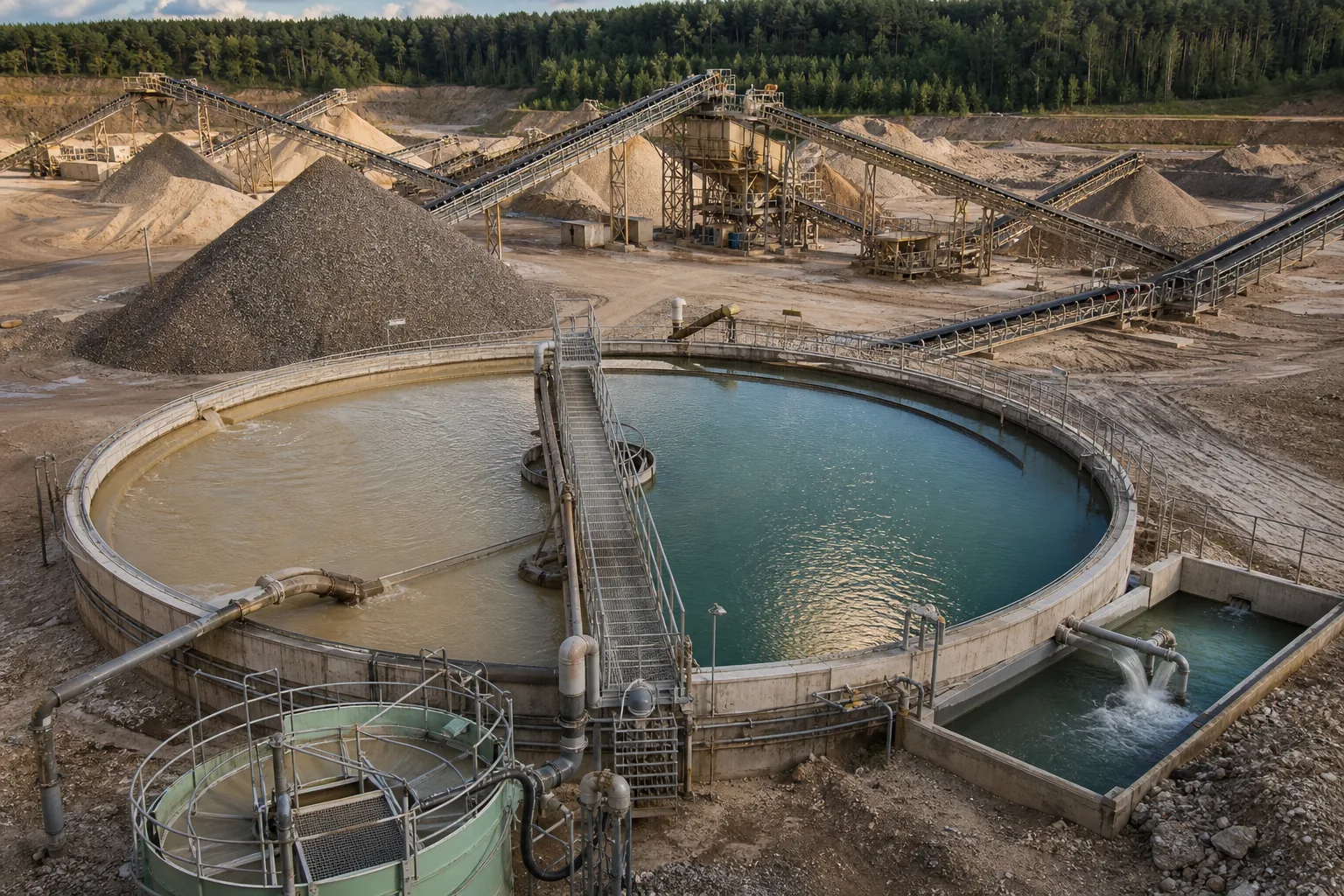
Define the purchase duty
Limestone identifies a feed source, not a complete polymer recipe. Buyers should characterize the actual wash-water suspension and operating water before accepting a supplier recommendation based only on the rock name or a generic mineral application list.
Identify the sample, actual feed and required water-and-solids result before asking for a recurring supply commitment.
Describe the operating slurry
Record fine-particle context, solids, pH, conductivity and relevant dissolved-ion or treatment data available at the site. Identify recycle ratio and any chemical additions. Use the aggregate application record to connect those measurements to the separator.
Avoid assuming that all limestone plants have the same water or fines distribution. Preserve the source and production condition for each sample.
Screen identified grades fairly
Use controlled activation and active-dose steps with an incumbent reference where available. Compare interface, overflow and settled-solids behavior at matched times. If coagulant is part of the current sequence, hold it constant for a direct polymer substitution.
Do not assign a changed result entirely to anionic charge when preparation or the upstream conditioning program also changed during the supplier trial.
Confirm the production limit
Measure reuse-water quality and the withdrawal or filtration result after stabilization. The combined endpoint guide explains why faster settling alone does not settle the buying question.
Link accepted code, preparation and commercial consumption to a tested feed range. Review the operating control method before converting a successful supervised trial into a recurring order.
Test the limiting condition
An apparently better grade tested at a lower solids load may be benefiting from the feed condition rather than chemistry. Repeat at comparable loading before promising the same lower consumption during full production.
Preserve any untested condition in the acceptance record. A promising sample response is not an unrestricted capacity or treatment guarantee.
Keep a traceable comparison
| Purchase check | Evidence | Decision boundary |
|---|---|---|
| Feed | Actual fines and operating water | Rock name not a recipe |
| Method | Fixed preparation and sequence | Comparable grade screen |
| Acceptance | Reuse plus withdrawal or filtration | Plant constraint addressed |
Retain the commercial code, sample reference, preparation method and measurement timing. Record rejected conditions as well as the preferred point so later shipments can be assessed against the actual evidence.
Request a scoped recommendation
Send fines and water results, current treatment sequence, separator, solids route and accepted outputs. Ask for the proposed grade code and the conditions under which the supplier expects the sample comparison to be meaningful.
Use the anionic emulsion sample and quotation form and review supply and packaging controls with Gongyi Xinqi Polymer Co., Ltd.. Confirm offered grade, availability and commercial terms before ordering.