
Define the purchase duty
Coal-wash fines should be treated as a defined suspension with its own particle and reagent history. A buyer should specify the fines circuit and required water-and-solids output, rather than selecting an anionic liquid solely from a broad coal-industry application claim.
Identify the sample, actual feed and required water-and-solids result before asking for a recurring supply commitment.
Identify the fines and water loop
Record solids, particle-size context, ash or mineral information where available, pH, conductivity and known upstream reagents. State the collection point and any blending. The tailings file gives the general thickening framework.
Keep the actual process-water relationship. A favorable sample from a different fines or flotation state should not be treated as representative of every campaign.
Screen the coupled separation
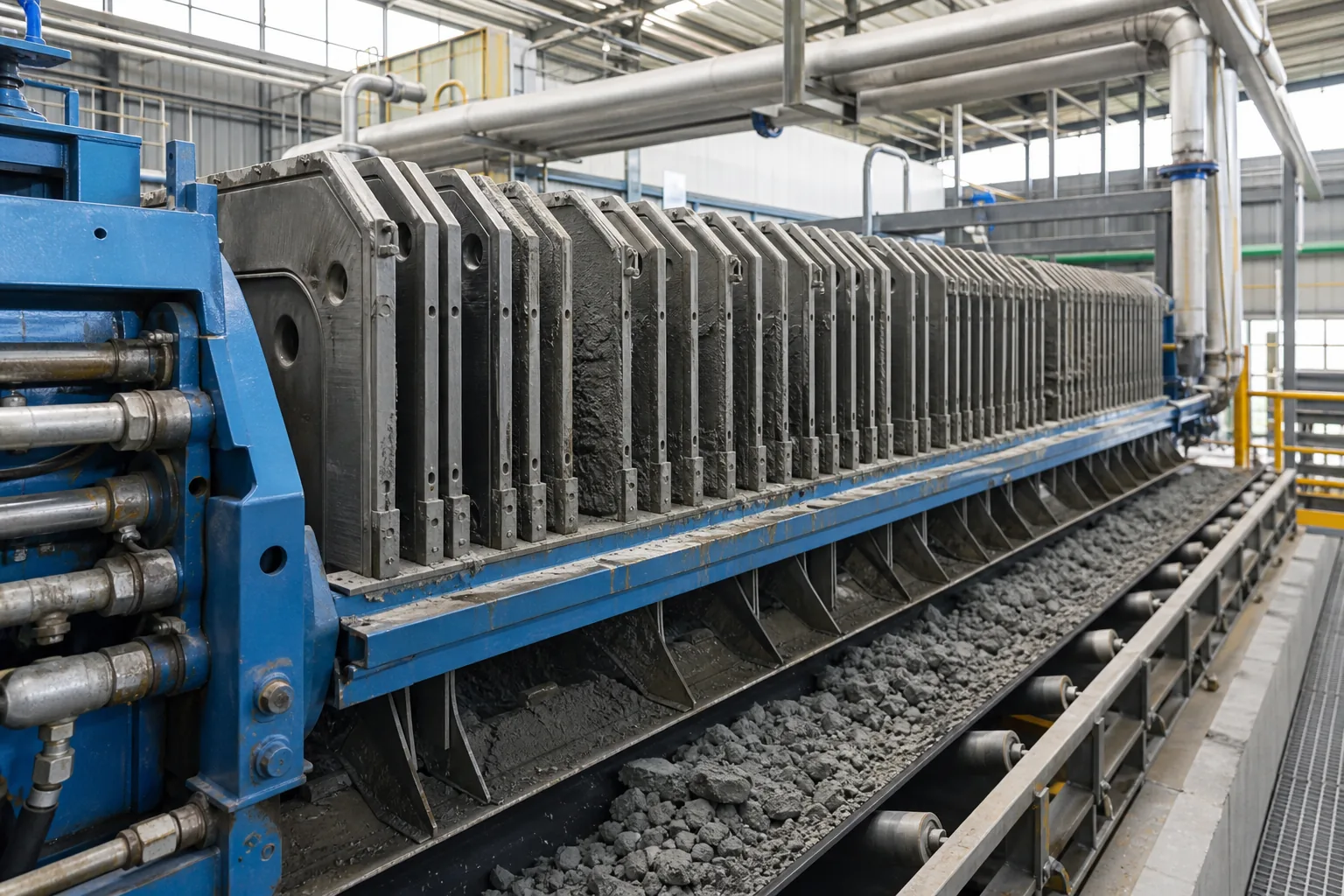
Prepare coded candidates consistently and compare active-dose curves with a reference. Measure interface, overflow fines and bed behavior at fixed times. Where underflow enters a press, retain enough sample and evidence for that next step.
A settling-only result can narrow candidates, but it cannot determine cycle time or cake release. The endpoint comparison keeps that limitation visible.
Approve useful plant performance
Verify calibrated delivery, actual solids loading and stabilization time. Record overflow reuse quality, withdrawal and filtration outputs against the agreed duty. Separate changes in mechanical settings or upstream reagents from the initial grade substitution.
Do not assume a polymer change increases product recovery or reduces disposal without measurements and the relevant process review. Keep commercial benefits connected to accepted evidence.
Test the limiting condition
An emulsion that makes fast settling but produces a difficult filter feed may not be the lowest-cost choice for the line. Evaluate the complete accepted route instead of multiplying the best short settling result into a projected annual saving.
Preserve any untested condition in the acceptance record. A promising sample response is not an unrestricted capacity or treatment guarantee.
Keep a traceable comparison
| Purchase check | Evidence | Decision boundary |
|---|---|---|
| Stream | Fines source and reagent record | Relevant feed retained |
| Screen | Overflow and bed evidence | Coupled route considered |
| Plant | Reuse, transport and filtration | Measured commercial value |
Retain the commercial code, sample reference, preparation method and measurement timing. Record rejected conditions as well as the preferred point so later shipments can be assessed against the actual evidence.
Request a scoped recommendation
Send fines-stream details, current polymer and dose, water chemistry, thickener and press arrangement and target outputs. Ask for a sample plan that tests the operating condition most likely to limit acceptance.
Use the anionic emulsion sample and quotation form and review supply and packaging controls with Gongyi Xinqi Polymer Co., Ltd.. Confirm offered grade, availability and commercial terms before ordering.