
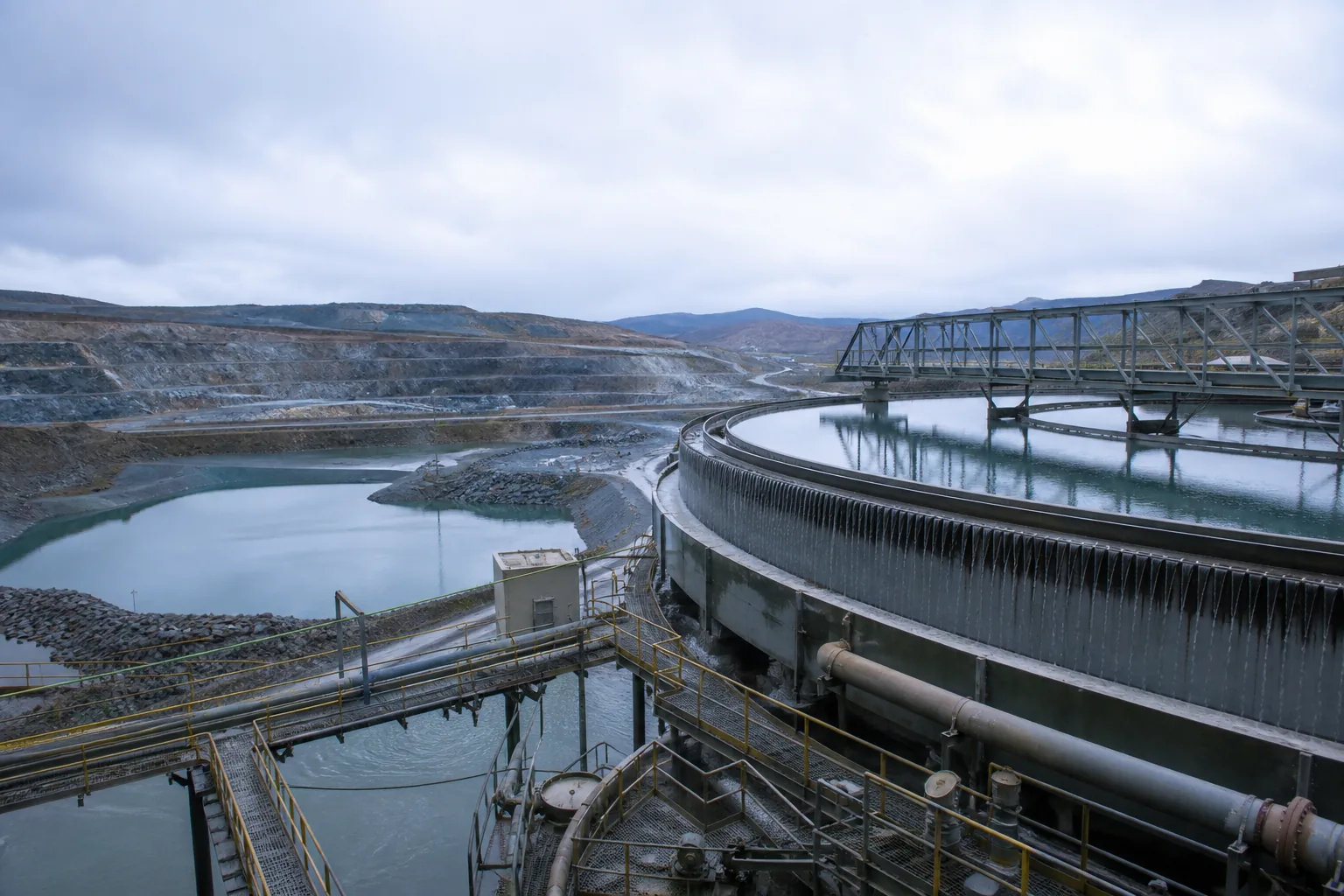
Characterize the feed window
Record ore or tailings source, particle-size distribution, solids concentration, pH, conductivity and dissolved calcium or magnesium. Include recycle-water ratio and upstream reagents.
A composite average can hide the feed that limits throughput. Test normal and difficult campaigns separately when mineralogy or water balance moves materially.
Design the thickener trial
Use a controlled dose ladder first, then reproduce dilution and feedwell mixing. Measure initial settling rate, overflow turbidity, bed compaction and the torque or yield-stress consequences of the selected condition.
The best point balances clear overflow, stable interface, target underflow and equipment margin. More polymer is not automatically more capacity.
Scale without losing the basis
Convert bench dose to active polymer per dry tonne and verify actual slurry flow and density. Calibrate the neat pump and water flow before comparing plant consumption with the laboratory record.
Review performance over several residence times and changing feed. Store dose, overflow, underflow, bed level and operating conditions together so later adjustment has a reliable reference.