
Define the mineral surface
Low anionic charge is a trial position for slurries where bridging matters but strong electrostatic repulsion could limit adsorption. Mineralogy, dissolved ions, pH, particle size and upstream coagulant all influence the result.
Compare it beside adjacent charge profiles on the same representative feed. Keep make-down concentration, aging time and active-polymer dose constant so the observed difference belongs to the grade rather than the preparation method.
Measure both rate and clarity
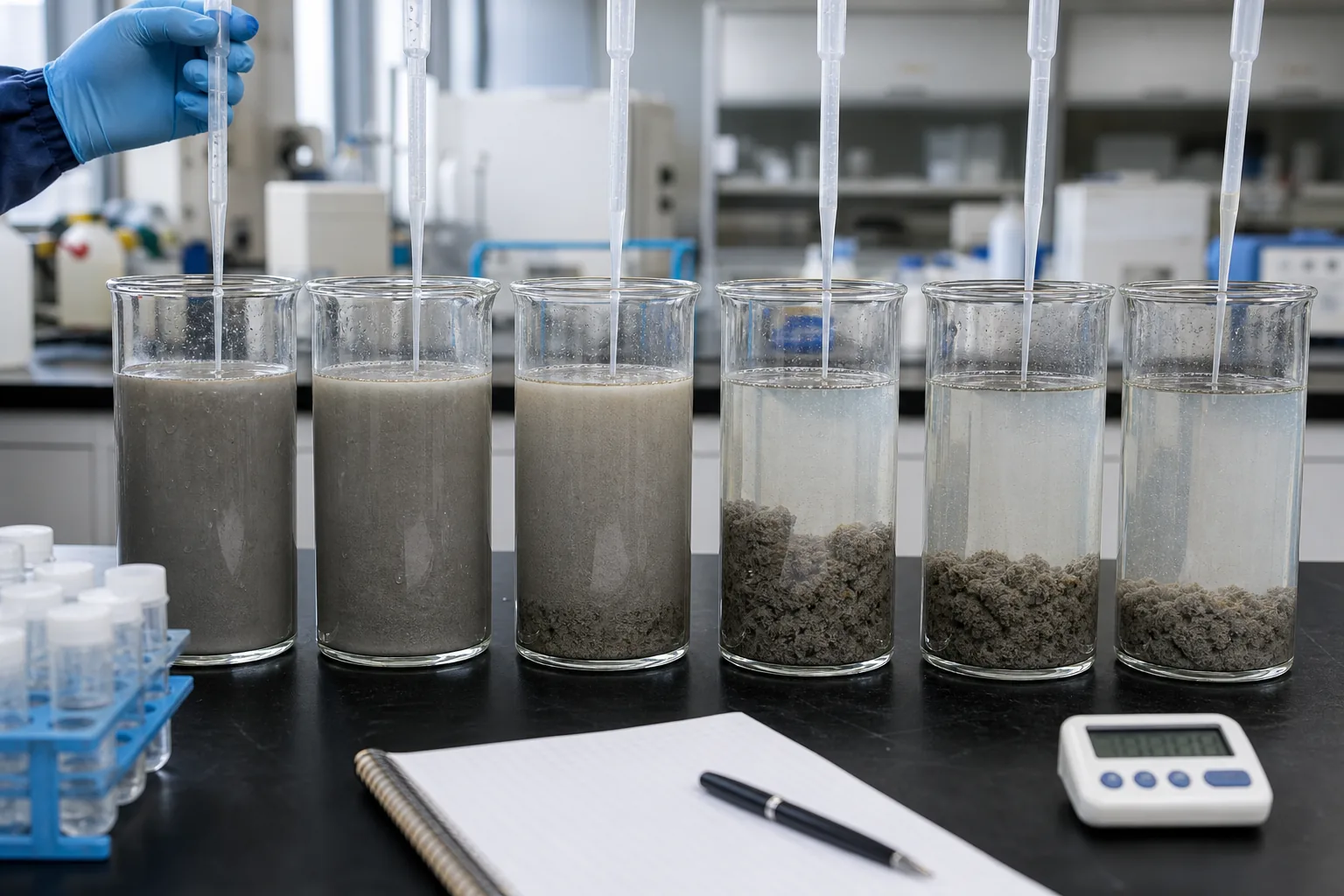
Record initial settling velocity, interface behavior, overflow turbidity, final bed volume and rake or filtration response. A fast interface can still carry fines into overflow, while a clear overflow can hide a loose, slow-compacting bed.
Use a dose curve rather than one beaker. Identify the lowest stable window that satisfies the process endpoint and repeat it after realistic feed shear.
Transfer the result to supply
Preserve sample code, lot, active content, charge family, density where used for pump calibration and the exact inversion recipe. State storage temperature, transfer pump and expected turnover.
Request drums or IBCs, sample quantity, destination, COA and SDS with the operating data. The purchase description should point back to a verified trial window, not only a broad charge label.