
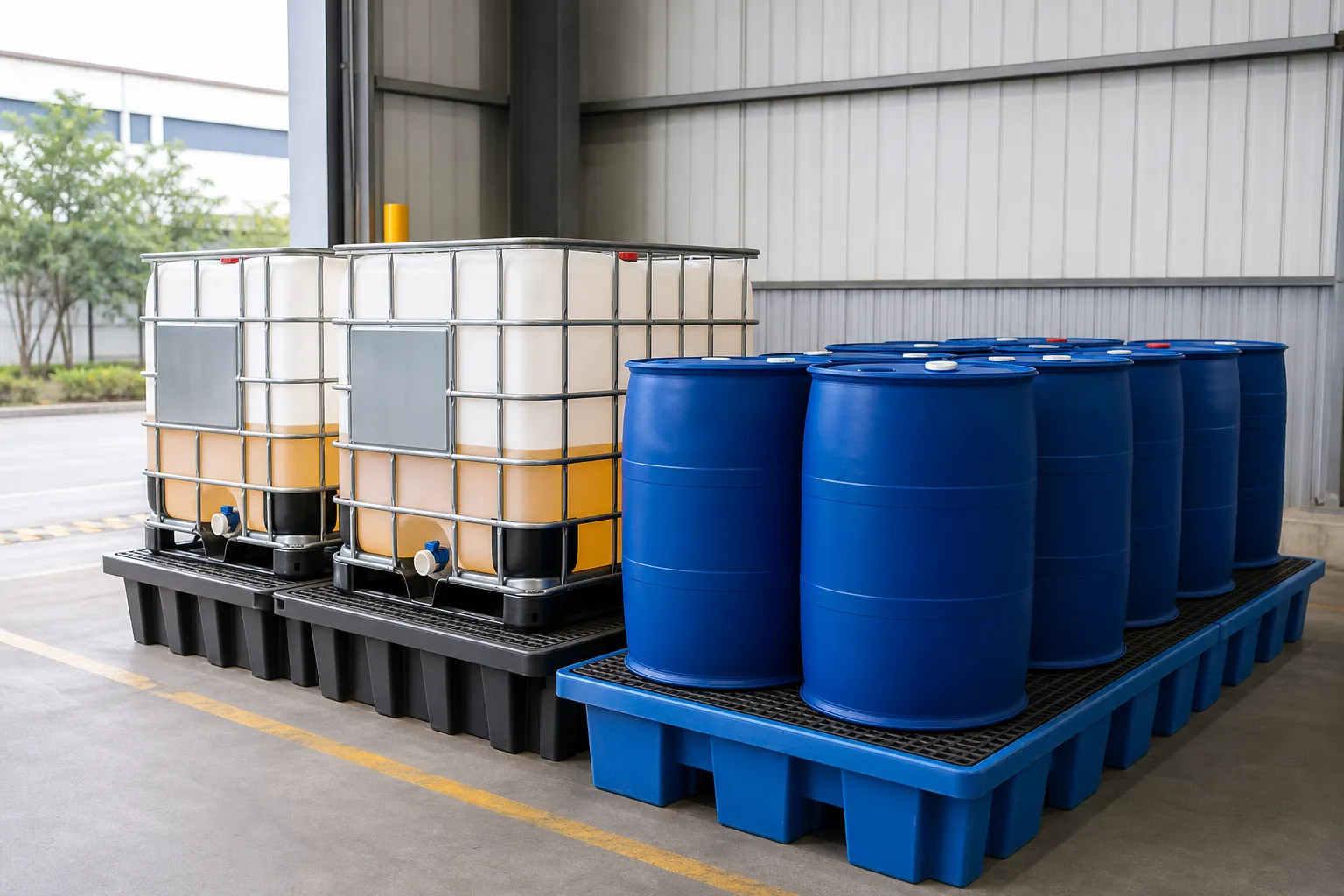
Define the purchase duty
A cheaper delivered kilogram of liquid does not automatically provide cheaper mineral separation. Procurement needs a clear active basis and a measured useful dose before comparing recurring cost. An assumed concentration or a pump percentage can distort both parts of that calculation.
Identify the sample, actual feed and required water-and-solids result before asking for a recurring supply commitment.
Identify what the declared percentage means
Ask whether the number describes active polymer, a solids test or another formulation basis. Obtain the method and whether the figure is typical or contractual. The supplier checklist provides the document context.
Do not treat total solids and active polymer as identical without a defined basis. Keep unclear values as open offer questions rather than filling them with favorable assumptions.
Normalize delivered commercial units
Use common currency, destination, delivery term and net mass. Divide cost per product kilogram by the agreed active fraction for a screening active-cost comparison. Where addition is measured by volume, use supported product density rather than assuming a litre equals a kilogram.
Include freight and package basis explicitly. Separate one-time equipment or trial support from recurring chemical expense so the comparison remains interpretable.
Apply the actual treatment requirement
Compare the active dose needed for equivalent clarity, solids handling and throughput on representative feed. The form-comparison guide explains why chemical form or neat price cannot establish process value.
Record calibration and feed-solids uncertainty. A nominal small saving that is below measurement repeatability should not become a guaranteed commercial benefit in the award record.
Test the limiting condition
An offer with a lower normalized active price can still require more active polymer to meet the same overflow and underflow limits. Calculate the accepted treatment cost before treating a low unit price as the winning bid.
Preserve any untested condition in the acceptance record. A promising sample response is not an unrestricted capacity or treatment guarantee.
Keep a traceable comparison
| Purchase check | Evidence | Decision boundary |
|---|---|---|
| Basis | Declared fraction and method | Comparable product quantities |
| Delivery | Mass, term and currency | No hidden freight assumption |
| Dose | Equivalent accepted output | Cost follows useful treatment |
Retain the commercial code, sample reference, preparation method and measurement timing. Record rejected conditions as well as the preferred point so later shipments can be assessed against the actual evidence.
Request a scoped recommendation
Provide quotations, active-basis documents, calibrated usage, dry-solids loading, destination and accepted outputs. Ask the supplier to identify missing inputs before presenting a precise delivered-cost comparison.
Use the anionic emulsion sample and quotation form and review supply and packaging controls with Gongyi Xinqi Polymer Co., Ltd.. Confirm offered grade, availability and commercial terms before ordering.